
Lomax Hard Tri-Fold vs Stance: Which Cover Fits Your Needs?
Choosing between our Hard Tri-Fold and Stance covers often comes down to how you use your truck and what you haul. Both are built with the same aerospace-grade aluminum panels and marine-grade seals, but the way those panels articulate—and the load limits that dictate—makes each one better suited to different real-world tasks.
We designed the Hard Tri-Fold with three equal panels that fold fully open or closed in seconds, while the Stance uses a two-panel hinge system that leaves a forward section permanently attached. In this guide we’ll walk through panel flexibility, weather protection, weight capacity, and installation so you can decide which Lomax Hard Tri-Fold vs Stance configuration matches your daily driving and cargo needs.
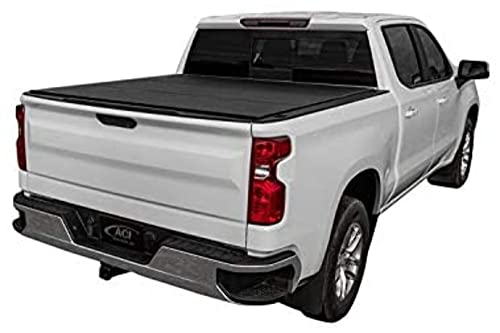
Panel Articulation and Bed Access
The Hard Tri-Fold divides the bed into three equal sections, each hinging independently. You can fold the rear panel up to expose the back third, fold two panels to open two-thirds, or fold all three against the cab for full bed access without removing anything from the truck.
The Stance locks its forward panel in place and hinges only the rear section. That gives you quick access to the tailgate area for small loads—groceries, toolboxes, camping gear—but reaching items near the cab means unlatching and propping the entire rear assembly. If you frequently load long lumber, pipe, or kayaks that extend past mid-bed, the Stance’s fixed forward panel becomes a hard stop unless you remove the cover entirely.
For crews rotating between short daily errands and weekend projects that need the full eight-foot bed, the Hard Tri-Fold’s three-panel articulation removes that trade-off.
Weather Sealing and Water Intrusion
Both covers use a continuous EPDM bulb seal around the perimeter and across each panel joint, meeting the same Federal Motor Vehicle Safety Standards dust and moisture resistance benchmarks that apply to OEM bed caps. Panel overlap at every seam creates a shingle effect so rain runs off rather than pooling.
The Hard Tri-Fold’s two intermediate hinges introduce two additional seal points compared to the Stance’s single hinge. In heavy rain or highway spray, that means two more joints where water can test the gasket if the tension clamps aren’t torqued to spec during installation.
The Stance’s simpler hinge line cuts the number of potential leak paths in half. For drivers in the Pacific Northwest or Upper Midwest who see consistent winter wet, that single-joint design has proven slightly more forgiving when seasonal freeze-thaw cycles stress the gasket material over multiple years.
Static and Dynamic Load Limits
Every tonneau cover publishes a static load rating—the weight it can hold when the truck is parked—and an implied dynamic limit for highway driving. Our Hard Tri-Fold is rated to 400 pounds static, distributed evenly across all three panels.
The Stance’s two-panel construction and reinforced crossbars push that figure to 500 pounds static. The larger rear panel spreads load over a longer span, and the fixed forward section acts as a structural brace rather than a hinged component.
In practice, few owners load that much weight onto a closed cover, but the difference matters if you strap a roof-top cargo box on the tonneau or stack firewood during a weekend trip. The Stance handles concentrated mid-bed weight better; the Hard Tri-Fold distributes lighter, longer loads more evenly because you can fold one panel up and rest cargo against the closed forward section.
Both covers share the same reinforced perimeter rail found across modern folding hard covers, so edge strength and clamp retention are identical.

Installation Complexity and Hardware
Installation for both covers follows the same clamp-on rail system—no drilling, no permanent modification to the bed. You position the side rails inside the stake pocket channels, tighten eight clamps per side, and verify that the front header sits flush against the bulkhead.
The Hard Tri-Fold adds two hinge assemblies between panels, each with its own tension adjustment. You’ll spend an extra ten minutes during initial setup making sure those hinges swing freely and latch securely. Once dialed in, they require only seasonal checks.
The Stance’s single hinge and fixed forward panel cut that setup time roughly in half. There’s one fewer moving part to align, and the rear panel’s gas struts are pre-installed and pre-charged at the factory. For owners who plan to remove and reinstall the cover frequently—swapping between a tonneau and a camper shell by season, for example—the Stance’s simpler hardware stack makes that swap less tedious.
Both covers ship with the same stainless mounting clamps, rubber edge trim, and installation manual. The only additional tool you’ll need beyond a socket wrench is a torque wrench to hit the 8 ft-lb spec on the clamp bolts.
Matching the Cover to Your Truck Routine
The choice between our Hard Tri-Fold and Stance covers isn’t about which is objectively better—it’s about which articulation and load profile fits the way you actually use your truck bed. If you alternate between securing small daily cargo and opening the full bed for weekend projects, the Hard Tri-Fold’s three-panel flexibility gives you more granular access without removal.
If you prioritize quick tailgate access for short-haul loads, rarely need full bed length, and value a higher static weight rating for stacking gear on the closed cover, the Stance’s two-panel design and reinforced structure deliver that with fewer moving parts to maintain. Both covers are built with the same aluminum, the same seals, and the same clamp system—so durability and weather resistance are identical; only the hinge count and panel articulation differ.
Common Questions About Hard Tri-Fold and Stance Covers
Yes, as long as all latches on the closed panels are fully engaged and you secure any open panels with the included retention straps. Driving with one or two panels folded against the cab is safe up to highway speed, but verify that nothing in the bed can shift and contact the folded panels.
If you fold all three panels up, use a bungee or cam strap around the stack to prevent wind lift at speed.
No, the Stance mounts to the stake pocket rail and the tailgate cap, so it works with bare painted beds, drop-in liners, and spray-in coatings equally well. The clamp feet are vinyl-coated to prevent scratching.
If you have an over-rail bed liner that raises the pocket height more than a quarter inch, you may need to add shim spacers under the side rails to keep the cover level.
The Hard Tri-Fold weighs 68 pounds; the Stance weighs 74 pounds. Both require two people to lift off safely without bending the panels.
Once the clamps are loosened, the Hard Tri-Fold folds into a compact bundle that one person can carry to a garage shelf. The Stance’s fixed forward panel makes it slightly more awkward to maneuver through a doorway alone, though the weight difference is minimal.
Both use rotary paddle latches with keyed cylinders at the tailgate. The latches lock the cover to the bed rail, so a thief would need to cut through the aluminum panel or pry the rail off to access the bed.
The Hard Tri-Fold’s three-panel design adds two more latch points along the sides, which means more points of entry to secure but also more places an attacker would need to defeat. The Stance’s single rear latch is simpler but relies entirely on that one lock; if it’s compromised, the entire rear section opens.
Neither cover is a vault, but both exceed the typical pry resistance of a soft roll-up by a wide margin.
The Stance’s 500-pound static rating and reinforced crossbars make it compatible with most clamp-on bed rack systems designed for tonneau covers. You’ll need to verify that the rack’s clamp feet can grip the Stance’s side rails without interfering with the hinge.
The Hard Tri-Fold’s three-panel hinge layout makes traditional bed racks impractical, because the crossbars would prevent the panels from folding. A few aftermarket manufacturers offer low-profile tie-down tracks that mount to the panel edges, but those reduce the cover’s articulation range.
The Hard Tri-Fold’s rear panel clears most OEM bed extenders and retractable amp steps as long as the extender’s hinge bracket sits inside the tailgate’s upper edge. Measure from the bed floor to the top of the extender bracket; if that height exceeds two inches, you may need to remove the extender when the cover is fully closed.
The Stance’s larger rear panel sits slightly lower when closed, so clearance is tighter. Most factory amp steps work fine, but bulky aftermarket extenders that protrude above the bed rail will block the Stance from latching unless you fold them down first.